TRINITY: CREATING A WORLD FROM SCRATCH
BUILDING AN ARCHITECTURE OF FRAGILITY
CONCEPT & DIRECTION (LENA HERZOG): creating kinetic (moving) sculptures within a larger kinetic sculpture, where phenomena and landscapes are unveiled, perspectives fold and unfold in a constant motion. Nothing is certain, things shimmer in and out of fragile existence, ghosts of extinct languages, the natural world and supernovae are intertwined in image and in sound design, and in the very architecture of the virtual “world” we “constructed” as well as in the pacing and the dynamic of the piece.
TECHNICAL DIRECTION (JONATHAN YOMAYUZA):
”Making the world of Trinity was a dance between visual direction and sound. Sometimes sound drove the timing and mood of the visuals, and just as frequently, image drove sound. Mostly, we went back and forth, each side responding to what the other had made, until we found the right balance. Because of this, shots were built in such a way that their duration could be adjusted without reworking adjacent scenes. Given how complex these scenes were, simpler setups were almost always better, and usually, the most elegant solution.
In keeping with the story about the fragility of the world, such “world” was built around the idea that something could exist one moment and vanish the next. By creating global parameters for the universe we built, we could shift individual elements as a whole, allowing us to make broad strokes or, at times, build mood subtly over time. Features like this throughout Unreal Engine, gave us room to experiment with how a scene would come to life. I executed scene layout, audio-responsive visuals, facial capture, animation retargeting, live-action integration, and VFX, to name a few—in keeping with Lena Herzog’s vision. This allowed us to explore the feel and aesthetic of the world in the early stages of development without getting sidetracked by the technical demands of assembling the shot externally, from beginning to end. It also allowed our team of 2 or 3 people in the engine to do what would normally require a full studio of specialists to achieve.
Unlike traditional cinema, this medium has no frame, you have little to no control over what the viewer sees or does. Knowing this influenced how we built the world itself. Through the use of sound and visual cues we are able to guide the user's attention toward a focal point without forcing it, creating a sense of discovery and leaving room for each viewer to have their own unique experience. Because we wanted to encourage exploration, we'd sometimes pull back from directing attention altogether, then slowly draw it back using primary, secondary, and occasionally tertiary points of interest. Relying on sound, lighting, and motion in the periphery to re-direct the viewer's attention. This invitation to explore also meant the world had to extend well beyond what the live-action footage covered. With no curtains to hide behind and nowhere left unseen, we built everything out fully, until it felt like a place you could actually step into.”
— Jonathan Yomayuza (Technical Director, & VR Engineer, TRINITY)
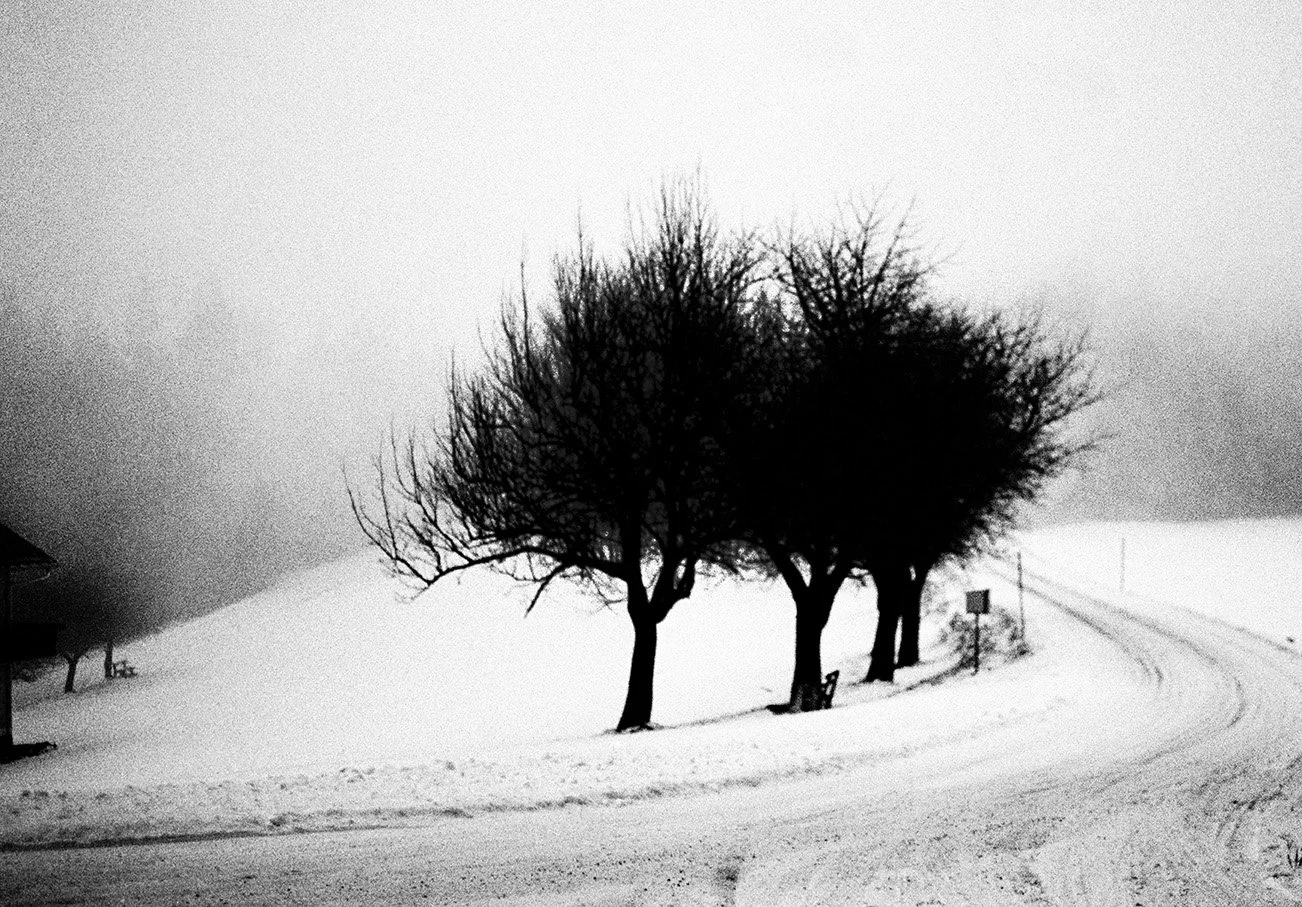
Twin Trees, Three Trees on the Hill, Old Tree (Pöllau, Austria) by Lena Herzog 1999
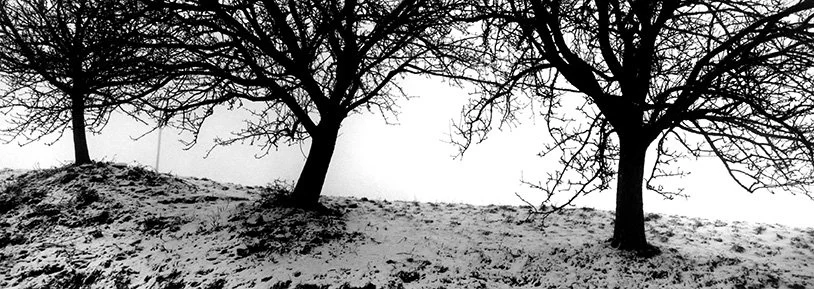
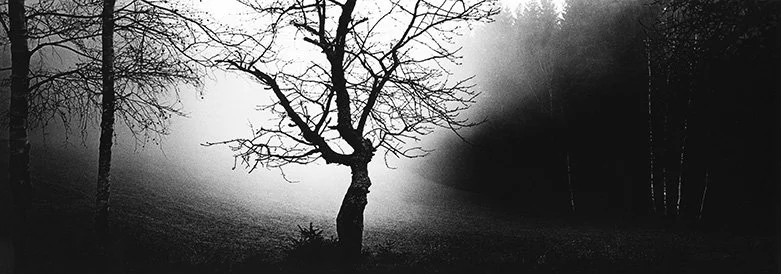
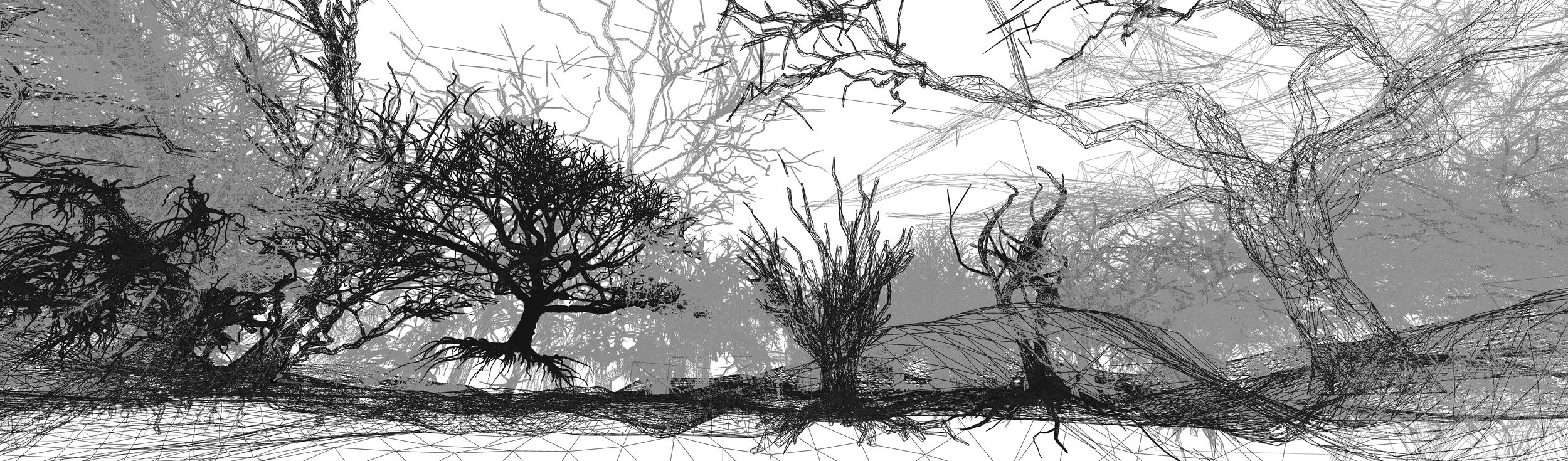
Building the forest based on photographs (by Lena Herzog) and photograph based 3-Dimensionalized drawings (by Amanda Tasse)
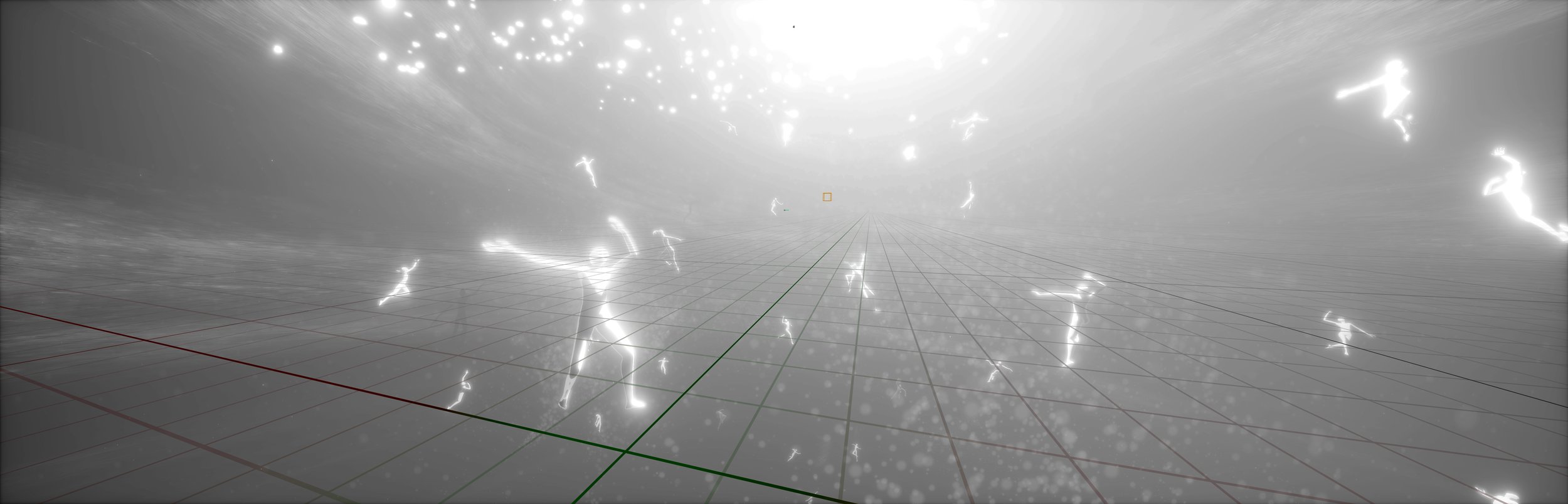
Building the 360 degree dance “floor” for an anti-gravity dance of the souls
TRINITY: INVENTING GEOGRAPHY
COMBINING PRECISION & ABSTRACTION
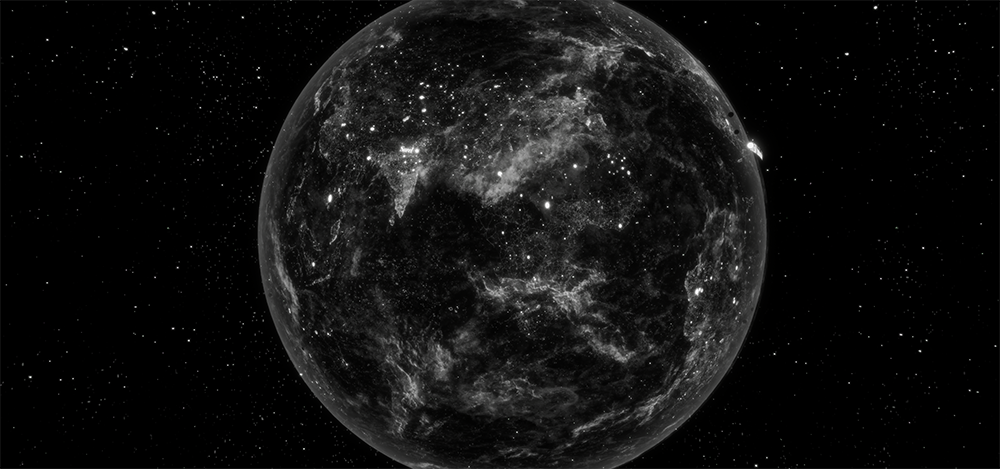
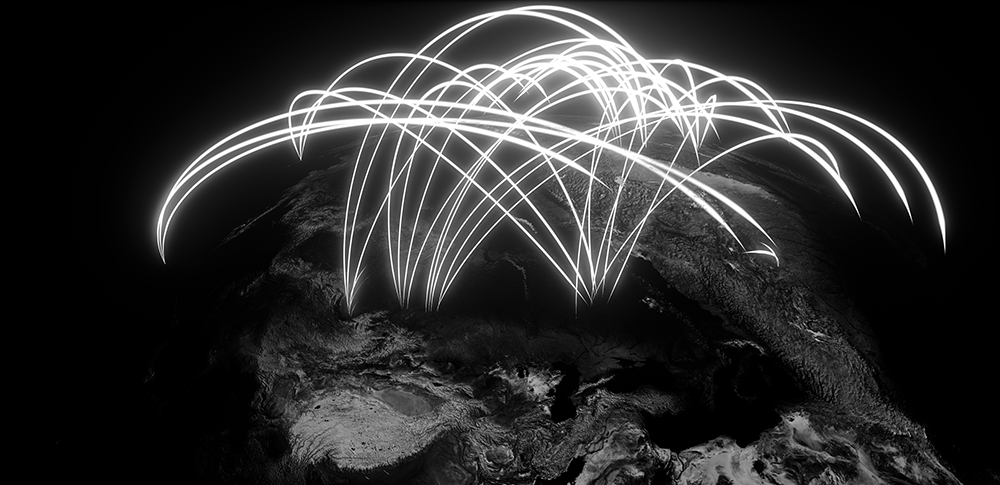
CONCEPT & DIRECTION (LENA HERZOG): intertwine precise locations and invented topography. Combine precise outlines of continents and exact GPS locations of where the voices were collected, with a collage of satellite shots of catastrophic climate events as a topography underneath. Mimic the gamed (by Princeton University study) potential nuclear “exchange” with locations of potential strikes on top of an invented abstracted topography.
“The idea of depicting the world as a fragile, beautiful thing was, at the outset, a leading aesthetic motif. And so there it is, floating in the void, as if made of glass, like a snow globe or like a soap bubble. If you poke, it disappears. For now, still there, still breathing, it is enticing, shimmering and delicate. You want to hold onto it, to preserve it like a living soul or spirit that could vanish, if you are not careful.
In the forest, the ground beneath our feet is moving, flowing like water or lava, because nothing is for certain, especially the ground under our feet. The forest, however, is motionless, windless, frozen as if in ice. The tension and the surprise of the reversal unnerves: what is meant to be still is moving and what is meant to move is still.
In the globe, I wanted to combine the precision and the abstraction. Rather, the created topography had to show the underlying reasons for extinction. Catastrophic climate events frequently cause people who live in the environment most affected by climate events, like floods and droughts, flee to cities and have to forget their native language in order to survive in societies they had to immigrate into. Hence the topography is made as the collage of catastrophic climate events: floods, hurricanes, droughts, as captured by satellites.”
—Lena Herzog
ANIMATION (AMANDA TASSE):
“The geo-graphia of TRINITY is an invented world for a place that can end and begin again, where physical extinction follows cultural, and time slippages of re-composition, variation, and retrograde fugue occur. To draw, navigate, and touch this world, the planet needed to be built in layers of perceptual truth: a foundation of mediated ‘fact’ interwoven with poetic texture. First, the verifiable and recorded: satellite imagery of terra, atmosphere, and weather pieced together at extreme resolution, the world’s road networks extracted into a fine web of lines, and GPS coordinates for speaker recordings as anchors within complex cultural seas no single point can honestly claim. Then, terrain built from human perceptual scale: surfaces painted from water, sea foam, moss, particles, and pulsating starlight. The planet can be read as both a map and body.
This constructed world can animate what an atlas cannot. It can turn inside out and be witnessed from within, collapse into a supernova, or be etched by arcs of nuclear exchange. I came to think of this as a relational cartography, a map not of where things are, but of how they matter at different scales: memorial and anticipatory grief, threads of destruction and repair, and our connection with universes within and without. Across the three chapters the planet appears, inverts, vanishes, and reconstitutes itself, a single Earth breathing through extinction and back toward life.”
—Amanda Tasse